
The tourism sector in Azerbaijan has great potential. There is also an opportunity for most types of tourism to develop.
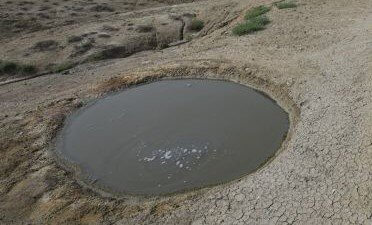
The Mud Volcano's Tourism Complex was created 59 miles southwest of Baku, about 17 miles northwest of the town of Gobustan, at an altitude of 235 feet [235 m] above sea level on the main road to Shamaxi. It is known as the "Sword" mud volcano. After the site's tourism opportunities were evaluated, it was decided to create a tourism complex. Thus, under the "Public Program for Social and Economic Development of Regions from 2019 to 2023," the project to create the next tourism infrastructure has been successful.
Azerbaijan, on the other hand, is known as the rare and classical development of mud volcanoes. More than 350 of the more than 2,000 known mud volcanoes are located in eastern Azerbaijan and the Caspian sea aquarium. Mud volcanoes are mainly found in the Absheron Peninsula, a group of islands around Baku, Shamaxi, Gobustan, and southeast Shirvana. 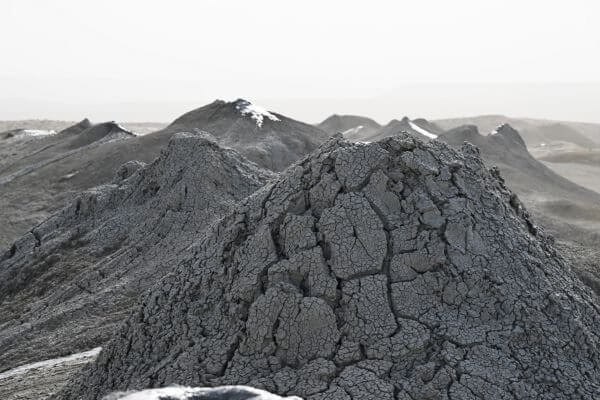
So what will tourists who come here see?
The complex's Tourism Information Center will operate. The center is made up of an exhibition hall and a workshop. The center provides information on the properties, natural and therapeutic properties of mud volcanoes, and the machine of a mud volcano. It also features around 80 rare minerals collected from across our country. The exhibition also includes information about the name, chemical composition, and bed taken from the mineral samples. The workshop, on the other hand, will host master classes of carpentry and oil paintings. The "Sword" mud volcano can be closely monitored in the complex. These volcanoes are made up of eight soups (hills) arranged in a row. The Sopka Bridge (big grunts) has formed two strips stretching northeastward. The bracket, which stretches more than 20 acres [20 ha], is 300 to 500 feet [300 to 500 m] long. In some places, however, these barriers can reach a height of up to 30 feet [50 m]. Altogether, 60 percent of the volcanoes in our country are active, but scientific sources do not report strong eruptions of the "Sword" volcano.
The complex's Natural History Exhibition Hall is of great interest to the richness of the exhibitions. The exhibition features wildlife and pet skeletons related to Azerbaijan and the world's fauna, insects belonging to the nature of our country, and reptiles. All animal skeletons and creatures on display are original exhibits. These exhibits are designed to meet bioethic standards and are made up of animal skeletons collected from various locations by Azerbaijani experts over the decades after biological death.
In other words, the exhibition demonstrates the richness and biodiversity of Azerbaijan's fauna. It is also admirable that photographs and illustrations of a variety of animals are exhibited on the walls in order to increase children and schoolchildren's interest in the surrounding world and give them an impression of animal skeletons. It also mentions a number of animals that have been protected by the government in our national parks, including leopards, bezoar goats, gazelles.
The mineral exhibition, on the other hand, features some 80 different types of minerals found in Azerbaijan. Visitors will be familiar here with rare precious stones, crystals and geological samples from different parts of our country.
A restaurant with 110 people, a pedestrian road, an observation point, and a square for tourists to watch volcanoes. All of this is for the convenience of tourists and is another example of the importance of tourism development in Azerbaijan.